ABK Companies Home

Category

Operations & Leadership

13 articles

Between the Lines: How the Modern Annual Report Tells a Portfolio's Real Story

Between the Lines: How the Modern Annual Report Tells a Portfolio's Real Story

For diversified enterprises, the annual report is more than a regulatory obligation—it is the clearest window into how leadership thinks about its portfolio. This piece examines how holding companies can use shareholder letters, segment framing, and honest disclosure to build durable investor confidence.


Promoted Beyond Their Expertise: The Hidden Divide Between Subsidiary Stars and Corporate Leaders

Promoted Beyond Their Expertise: The Hidden Divide Between Subsidiary Stars and Corporate Leaders

Exceptional performance at the subsidiary level rarely guarantees success in a corporate executive role—yet holding companies continue to promote their best operational leaders into positions that demand an entirely different skill set. Understanding why this transition so frequently fails, and what organizations can do to close the gap before a leadership vacancy becomes a portfolio liability, is among the most consequential challenges facing multi-business enterprises today.

Grown in the Subsidiary, Lost at the Top: The Leadership Pipeline Gap Haunting Corporate Portfolios

Grown in the Subsidiary, Lost at the Top: The Leadership Pipeline Gap Haunting Corporate Portfolios

Diversified holding companies invest heavily in developing talent within individual business units, yet consistently fail to build the cross-portfolio leadership pipelines that sustain long-term enterprise value. The executives who thrive inside subsidiaries rarely ascend to corporate-level roles—and the reasons why reveal a structural problem most organizations are reluctant to confront. Understanding this gap is the first step toward closing it.

Why High-Performing Executives Leave Diversified Portfolios—And What Keeps Them

Why High-Performing Executives Leave Diversified Portfolios—And What Keeps Them

Compensation rarely explains why talented leaders exit diversified holding companies. The deeper issue is organizational—fragmented structures deny capable executives the visibility, authority, and cross-unit leverage they need to do their best work. Companies that address the design problem, not the pay problem, are the ones that retain the people who drive outsized portfolio value.

The Cost Nobody Budgets For: How Fragmented Subsidiaries Quietly Drain Corporate Value

The Cost Nobody Budgets For: How Fragmented Subsidiaries Quietly Drain Corporate Value

Across diversified corporate portfolios, the most damaging inefficiencies rarely appear on any single balance sheet. When subsidiaries operate with incompatible systems, disconnected procurement channels, and divergent operational standards, the cumulative drag on enterprise value can be staggering—and almost entirely invisible until the losses are too large to ignore.

When Size Becomes a Handicap: Reclaiming Speed Inside Large Corporate Portfolios

When Size Becomes a Handicap: Reclaiming Speed Inside Large Corporate Portfolios

Growth through acquisition and diversification is a hallmark of successful holding companies—but scale carries a hidden cost. As portfolios expand, decision-making slows, approval chains lengthen, and the organizational agility that once defined a company's competitive edge quietly erodes. This article examines how large corporate portfolios can reclaim operational speed without abandoning the oversight structures that protect enterprise value.

Untapped and Overlooked: Why Holding Companies Struggle to Convert Shared Customers Into Shared Revenue

Untapped and Overlooked: Why Holding Companies Struggle to Convert Shared Customers Into Shared Revenue

Among the most underutilized assets in any diversified corporate portfolio is something that already exists: a customer base that, in many cases, spans multiple subsidiaries without any of them fully realizing it. The organizational and cultural barriers preventing subsidiaries from collaborating on customer solutions are well-documented—but rarely addressed with the urgency the revenue opportunity demands. For holding companies willing to confront these barriers directly, the upside is substant

When Goals Diverge: The Incentive Misalignment Quietly Draining Value From Multi-Business Portfolios

When Goals Diverge: The Incentive Misalignment Quietly Draining Value From Multi-Business Portfolios

Across diversified business portfolios, one of the most persistent—and least visible—sources of value destruction is not market volatility or operational inefficiency. It is the quiet friction that emerges when subsidiary leaders and corporate headquarters are, in practice, optimizing for entirely different outcomes. Understanding how compensation design and performance metrics drive this divergence is the first step toward closing it.

The Autonomy Trap: How Holding Companies Quietly Erode Value by Misjudging Subsidiary Independence

The Autonomy Trap: How Holding Companies Quietly Erode Value by Misjudging Subsidiary Independence

One of the most consequential decisions a holding company makes is one it rarely treats as a formal decision at all — how much independence to extend to each subsidiary. Get that calibration wrong in either direction, and the financial and cultural damage can take years to surface and longer still to repair. This article examines the structural warning signs of misalignment and offers a practical framework for corporate leaders to recalibrate before performance deteriorates.

The Intelligence Advantage: How Data-Driven Holding Companies Outperform Across Their Portfolios

The Intelligence Advantage: How Data-Driven Holding Companies Outperform Across Their Portfolios

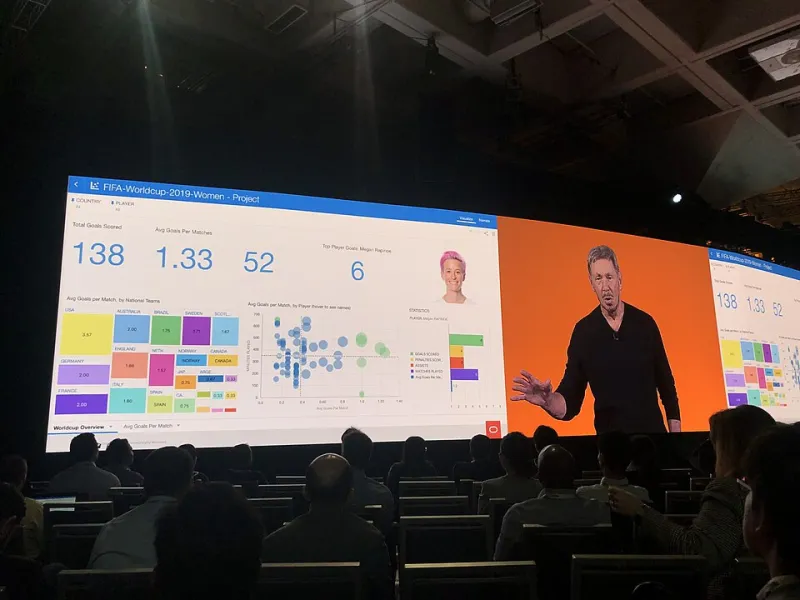
Modern holding companies are discovering that a unified data infrastructure is not just an operational convenience—it is a strategic asset. By deploying business intelligence tools across diverse subsidiary operations, corporate groups can benchmark performance, identify inefficiencies, and make faster, more confident decisions without compromising the autonomy that makes each business unit effective. The competitive gap between data-mature holding companies and those still relying on fragmented

Governing the Portfolio: How Holding Companies Grant Freedom Without Losing Control

Governing the Portfolio: How Holding Companies Grant Freedom Without Losing Control

The most effective holding company structures do not force subsidiaries into a single operating mold. Instead, they establish clear boundaries of authority that allow business units to move quickly while remaining connected to a shared strategic direction. Getting that balance right requires deliberate governance design — not improvisation.

One Vision, Many Businesses: The Integration Errors That Derail Holding Company Success

One Vision, Many Businesses: The Integration Errors That Derail Holding Company Success

Bringing multiple business units under a single corporate umbrella is one of the most complex organizational challenges an enterprise can undertake. Even well-resourced companies with sound strategic intentions frequently stumble on avoidable operational and cultural mistakes. This guide examines five critical errors that holding companies make during integration — and the proven approaches that prevent them from becoming permanent liabilities.